The Amsterdam moment and parental paranoia
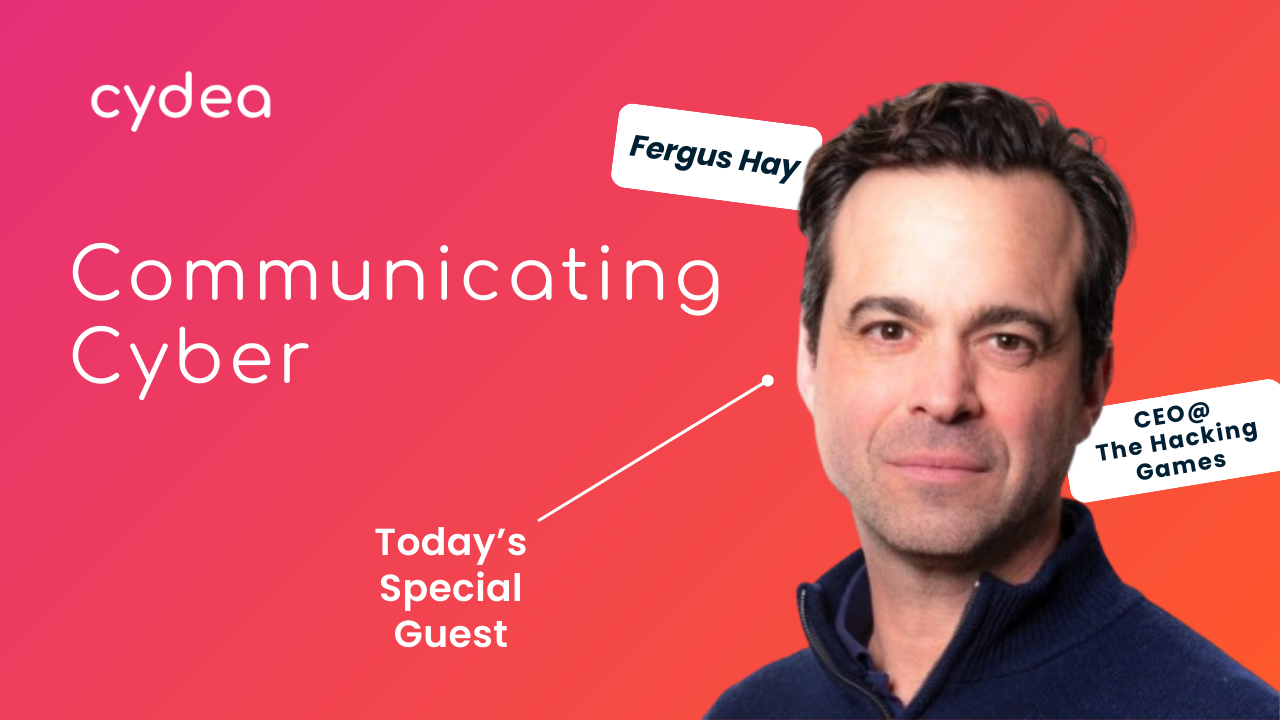
Fergus describes himself as having “0 credibility” in the technical sense, but his entry into the world of cyber security was a visceral one. It started two and a half years ago during a meeting in Amsterdam with a group of hackers. He went in looking for an investment opportunity and walked out with a sense of “parental paranoia.”
As Fergus explained: “I walked out 3 hours later, totally aghast. Totally shocked because what I heard was deeply personal. What I heard was that the majority of criminal hackers are actually children, teenagers and they’re being recruited by cyber criminal gangs off gaming platforms that we all know, like Roblox and Minecraft and Fortnite.”
As a father of three this was a wake-up call. He realised that while he thought his kids were in a safe, Lego-like environment, they were potentially “in the lion’s den” without him even knowing. This realisation became the catalyst for The Hacking Games, a mission to redirect young talent away from cyber crime and toward the cyber security industry.
Why we need to ride the gyre
We talked about how Fergus moved from marketing fizzy drinks to tackling youth cyber crime. He used a wonderful metaphor from his head of psychology, Mark Loftus, about “riding the gyre.” A gyre is the thermal wind a bird of prey rides. At the bottom, the bird sees a “fat rat” - a small, immediate goal. But as it rises higher and the circle widens, it sees the bigger picture, the “baby stag.”
For Fergus, the “fat rat” was just an investment, but as he gained more insight, he saw the systemic social problem. He realised that “if you want to persuade someone, particularly young people, to choose one option and not the other, you need to understand them emotionally. You need to be able to communicate simply. You need to be able to inspire them to aspire to a level of status that they can achieve.”
In our industry, we are brilliant at the rational and the technical, but we often fail at the emotional. We’ve spent years using fear-based language and impenetrable jargon. Fergus’s point was clear: “You can’t do that rationally with technology. You have to do that emotionally with storytelling.”
The death of the “hoodie in the basement”
One of the most striking parts of our chat was how the profile of a “hacker” has changed. We still cling to the 1990s Hollywood stereotype of a kid in a hoodie in a dark basement but he pointed out that the barrier to entry is now so low that the profile has changed entirely.
He shared the story of Ricky Handschumacher, a top-tier youth baseball player in the US who ended up in prison for an $8.5 million crypto heist. Ricky wasn’t a socially isolated “basement dweller”; he was an “alpha athlete” who got pulled into the world of hacking after being DDoSed during a Halo tournament.
“For this new generation, the barrier to entry to be a hacker is so low now,” he explained. “Google will give you the tools, YouTube will teach you how to use it, Discord will find you your community, and TikTok will inspire you with a lifestyle that you might want.”
This is an “AI native” generation that isn’t necessarily writing complex code from scratch, they are playing “technology Lego” piecing together solutions to get the impact they want. If we want to reach them, we have to stop being “dad on the dance floor” and start understanding their actual motivations.
Lions, crocodiles and intrinsic motivations
We also explored why it is so hard to get things done inside large organisations. Fergus uses a “lions and crocodiles” framework that I found incredibly relatable.
Crocodiles are the people who hide under the water, just their eyes showing. “If you step into their territory and threaten their livelihood, which is their mortgage, their sense of self-worth… then they bite your legs off.” These are the people who stall deals and block security programmes because they are driven by defensive fears.
Lions, on the other hand, are driven by “self-actualisation, mastery, achievement, respect, progress, promotion.” If you want to get a project over the line, you have to know which one you’re talking to.
I’ve seen this myself. I once had a client who kept bringing us back for more work, not because of our KPIs, but because, as they told me: “Every time I bring you guys in, I get promoted.” That is a lion. They want to achieve something and if you can calibrate your proposition to what they emotionally care about, the door opens.
Moving from product to vision
As we wrapped up, I asked Fergus what one thing he would change about how we communicate cyber security. His answer was a challenge to the entire industry: we need to stop talking about how clever our products are and start talking about the benefits they deliver.
“The industry has, in a way, delighted in being behind the shadows,” he said. “It has thrived on barriers of language and complexity, and a significant lack of diversity in how it thinks. It’s been quite impenetrable. We need to stop focusing on product launches and start thinking about visions for what a future safe world looks like.”
He pointed to companies like Tesla or IBM. Elon Musk doesn’t talk about battery kilowatts; he talks about transitioning the world to electric mobility and putting people on Mars. IBM didn’t just sell servers; they sold a “smarter planet.”
The cyber security companies that will win in the next decade are the ones that can move beyond “cyber secure X, Y, Z” and offer a visionary, positive view of the future that resonates with the person on the street and the 17-year-old in their bedroom.
It was a powerful reminder that while our work is technical, our impact is human. We need to start communicating like we believe it.