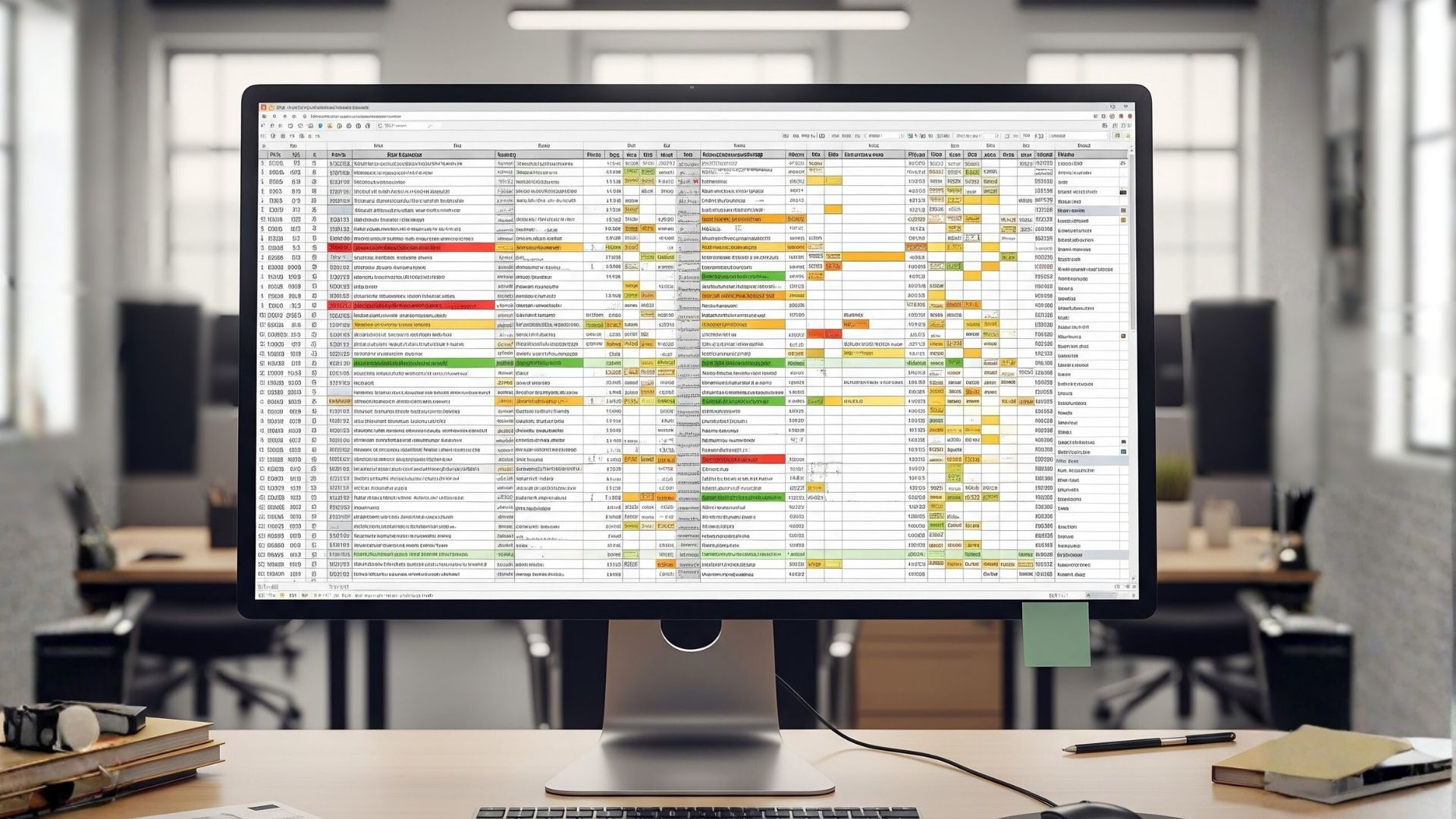
Most organisations can produce a risk register with well over 100 entries but very few can answer a much simpler question:
Which five actually matter?
This is not because organisations do not understand risk, or because teams are failing to do the work. It is because many risk registers are not actually registers of risk at all. They are inventories of control failures, issues, and observations; useful inputs, but poor tools for decision-making.
The result is a document that looks comprehensive, feels reassuring, and quietly fails the people it is meant to support.
Control failures are not risks
A common pattern we see is risks written at control level:
- “Lack of multi-factor authentication”
- “Unpatched servers”
- “Insufficient security awareness training”
These are not risks. They are causes or conditions.
The risk is what happens if those conditions combine and materialise. For example:
- Loss of sensitive or regulated data
- Prolonged service outage
- Regulatory or contractual breach
- Financial loss or reputational damage
When control failures are listed as risks in their own right, the register quickly fills with detail while losing sight of impact. Everything becomes “high risk”, prioritisation disappears, and senior decision makers are left with noise rather than insight.
Why aggregation beats granularity
Granular detail has its place. Delivery teams need it to fix problems and track progress. Boards do not.
Human decision-making does not work at the level of 100 competing items. Boards are not choosing between controls, they are weighing trade-offs such as:
- Investment versus exposure
- Downtime versus tolerance
- Risk reduction versus risk acceptance
This requires aggregation and when related issues are grouped into meaningful risk themes, such as data compromise, service disruption, regulatory failure, or dependency on key suppliers, something interesting happens. The register collapses.
What initially looked like 120 separate “risks” typically becomes 8–12 genuine risk statements that reflect how the organisation could realistically be harmed, only at this point, prioritisation becomes possible.
How boards actually make decisions about risk
Boards rarely ask whether a specific control is missing or misconfigured, they focus on bigger picture questions, like:
- What could seriously impact the organisation this year?
- How bad would it be if it happened?
- What are we doing to manage it?
- What are we consciously accepting?
A good risk register supports these questions clearly and consistently.
A poor one documents activity without enabling decisions.
If a risk register cannot be read, discussed, and acted on at board level, it is not fulfilling its purpose; regardless of how detailed it is.
The comfort of coverage versus the value of clarity
There’s a certain comfort in a massive risk register because it feels like you’ve been thorough and covered every possible base, but simply having a long list of items isn’t the same thing as actually understanding your exposure.
Real risk management isn’t just about cataloging every single thing that could go wrong but about figuring out what has an impact and being clear about the choices you’re making. That kind of clarity can be uncomfortable as it forces you to prioritise and admit that you can’t fix everything, but it’s the only way to move past the spreadsheet and actually start governing.
When a risk register becomes nothing more than a giant inventory of controls, fixing it requires a fundamental shift in how the data is organised. This is where the right tools become essential—specifically those built for managing risk rather than just checking compliance boxes.
We designed the Cydea Risk Platform with this mindset. Instead of encouraging you to pile up more items on a list, it helps model how vulnerabilities, threats, and control gaps combine to create real-world business risk. This approach allows teams to keep their technical evidence and ground-level notes tucked away so they don’t distract from the Board-level view. It helps you condense hundreds of issues into a handful of clear, actionable statements, making it much easier to track how changes in your environment actually shift your overall exposure. You end up with a register that is shorter and far more useful because it finally surfaces the work that matters.
Clarity over coverage
A huge risk register often serves as a form of reassurance, but the most effective ones are those designed to actually help people make a choice. By focusing on clarity—really understanding what matters most and how it’s being handled—risk management stops feeling like a reporting chore and starts functioning as a proper governance tool. It is almost always the case that once you’ve filtered out the distractions, that original list of 120 items is really just a dozen or so significant issues that need your attention.




 Lucia Turner
 Penny Yap